The Download: AI’s real extinction threat and age-reversal tech for eyes
technologyreview.com·4d ago
TL;DR
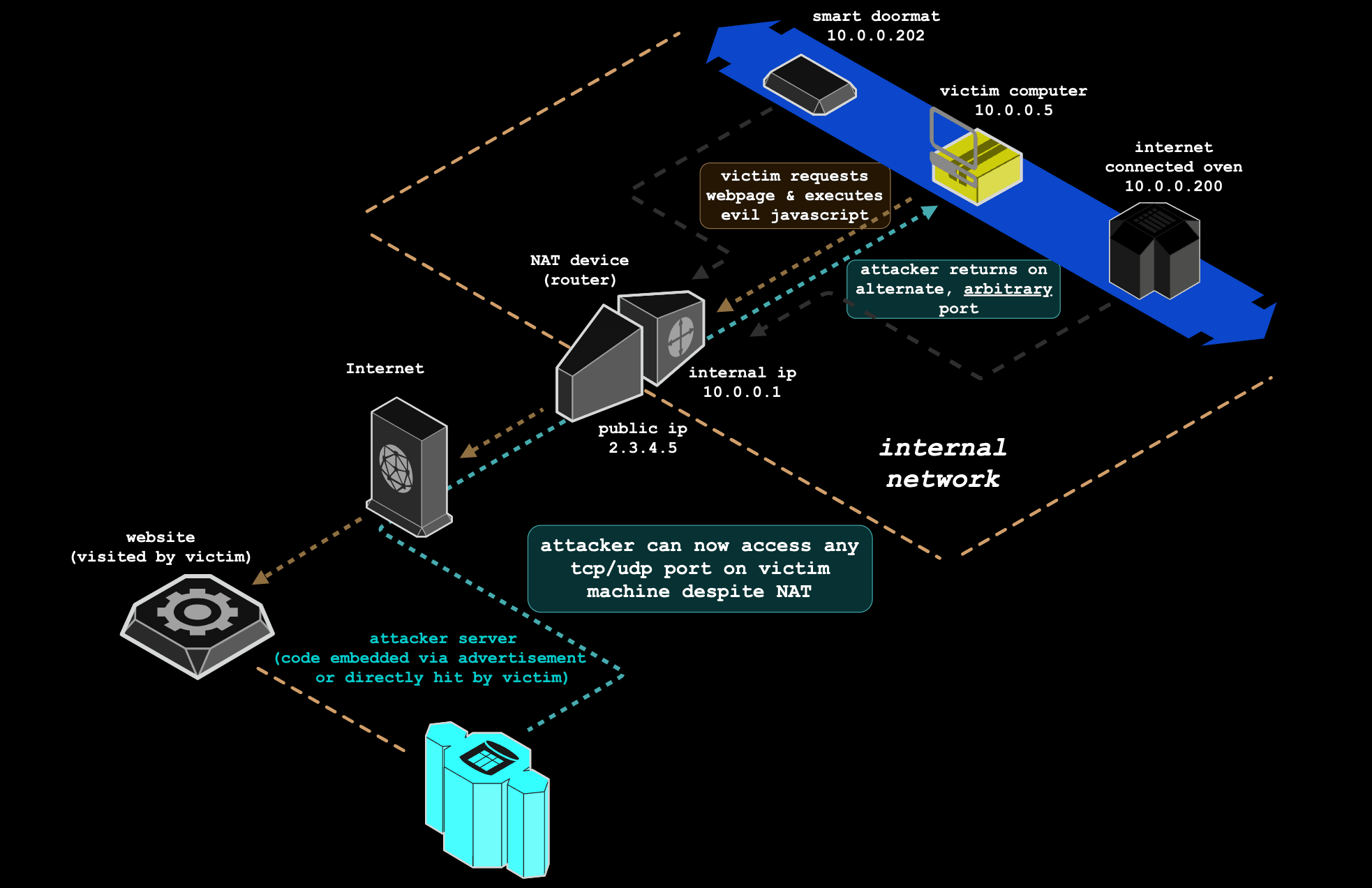
NAT Slipstreaming v2.0 enables attackers to remotely access any TCP or UDP service on a victim's network by simply having the victim visit a malicious website. This technique bypasses the victim's NAT and firewall protections, allowing for arbitrary control over firewall rules.
✦ Why It Matters
Network engineers should review and update firewall configurations to mitigate risks from NAT Slipstreaming vulnerabilities.
Key Takeaways
How It Works
NAT Slipstreaming v2.0 exploits the ALG mechanism in NAT devices, allowing attackers to control port mappings dynamically. By using techniques like WebRTC for internal IP discovery and precise packet manipulation, the attack can bypass browser restrictions and open ports for unauthorized access.
This is achieved through a series of crafted HTTP requests that the NAT interprets as legitimate traffic, thus allowing the attacker to inject malicious packets into the victim's network.
Related