EmbeddingGemma 2: an open, lightweight multimodal embedding model
deepmind.google·6d ago
TL;DR
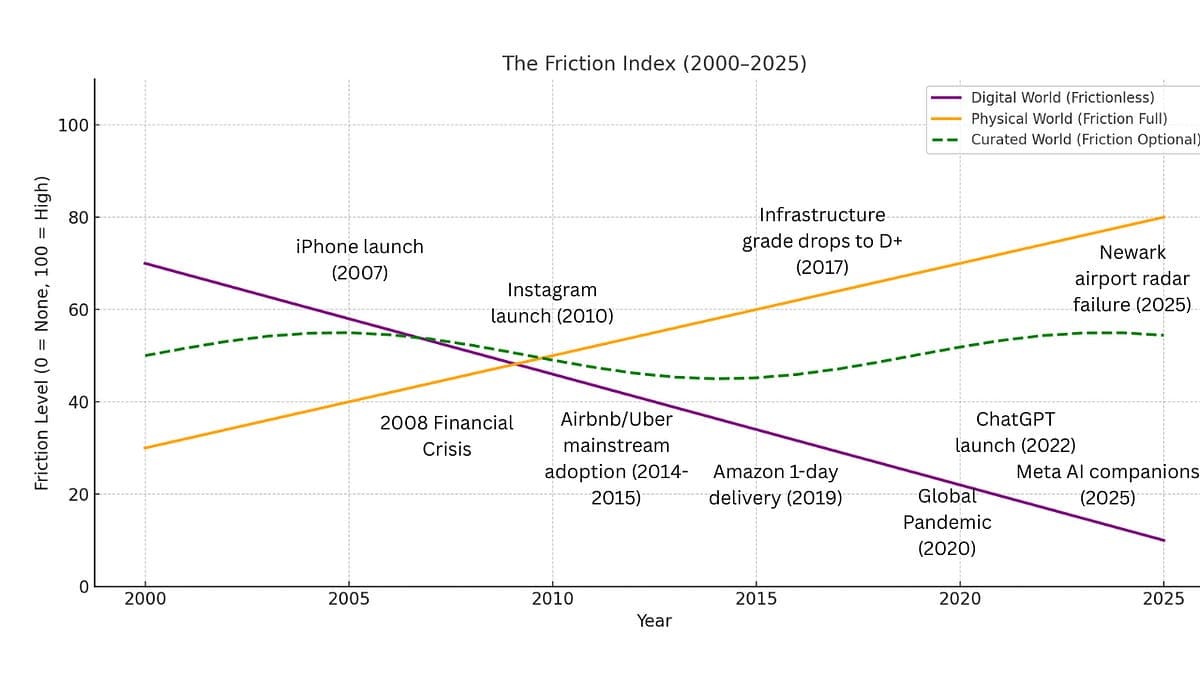
Friction, often overlooked, is a crucial element in our economy, redistributing effort across various systems. Its impact is reshaping education, infrastructure, and labor dynamics.
✦ Why It Matters
Evaluate how your projects can address friction in user experiences and labor systems today.
Key Takeaways
Full Summary
Friction, defined as the effort required to navigate systems, has become a critical factor in today's economy, creating three distinct realms: a frictionless digital world, a friction-laden physical world, and curated spaces that monetize the removal of friction. In the digital realm, companies like Meta are developing AI companions that simulate social interactions, catering to a growing demand for connection while fostering isolation.
Meanwhile, the physical world suffers from decaying infrastructure, exemplified by failures in air traffic control systems. This disparity highlights a misalignment where educational credentials signal value without the corresponding effort, as students increasingly rely on AI tools for academic tasks.
The implications are profound, as society grapples with the consequences of a simulation economy that diminishes the value of real-world engagement and effort.
Related