EmbeddingGemma 2: an open, lightweight multimodal embedding model
deepmind.google·6d ago
TL;DR
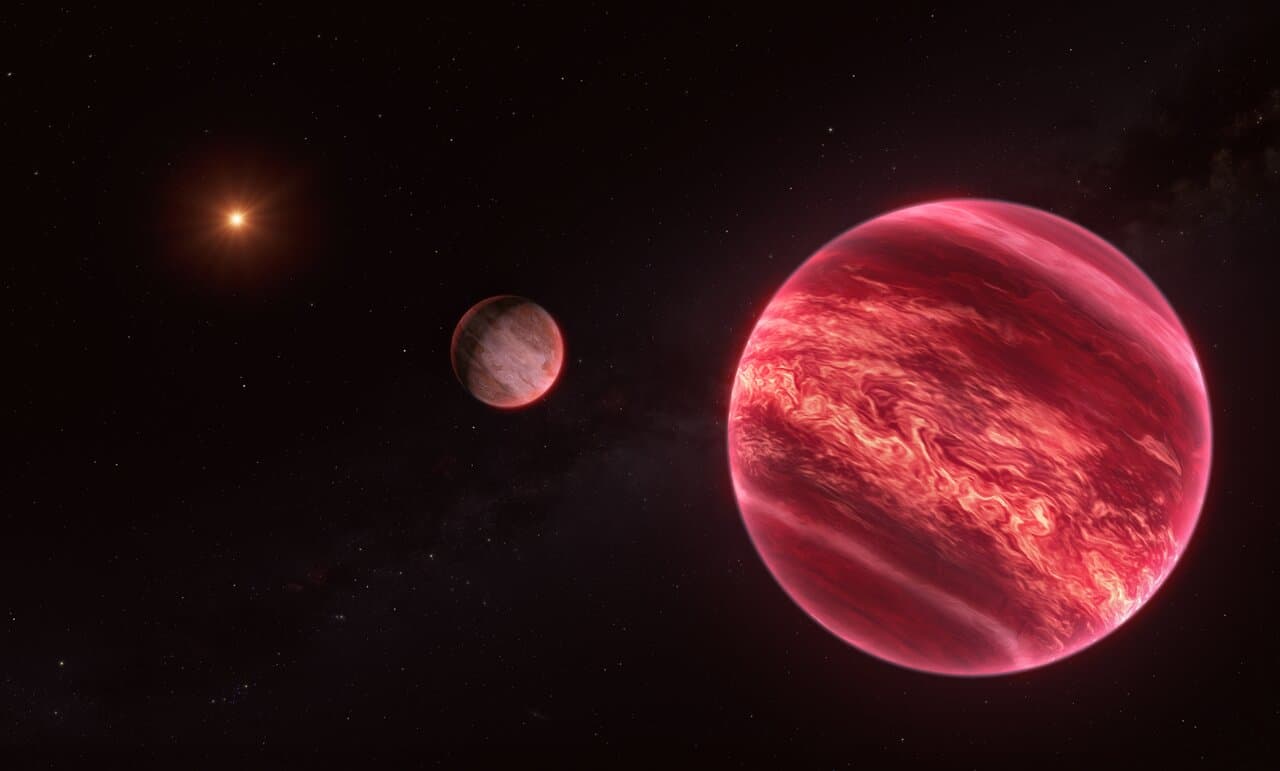
Astronomers have potentially discovered the first exomoon, a moon-like object orbiting a brown dwarf in the CD-35 2722 system, challenging traditional definitions of celestial bodies.
✦ Why It Matters
Consider how this discovery could influence future astronomical classifications and naming conventions.
Key Takeaways
Full Summary
Using the European Southern Observatory’s Very Large Telescope, researchers detected a massive object, termed an exosatellite, orbiting a brown dwarf in the CD-35 2722 system. Unlike moons in our Solar System, this object does not orbit a planet but instead circles a brown dwarf, which is larger than a planet but smaller than a star.
The exosatellite is at least as massive as Jupiter, while the brown dwarf exceeds 30 times Jupiter's mass. The team employed the radial velocity method to observe wobbles in the brown dwarf caused by the exosatellite, providing strong evidence for its existence.
This discovery is significant as it represents the first plausible detection of an exosatellite, prompting a reevaluation of how we classify celestial objects. Future observations with the upcoming Extremely Large Telescope may allow for the detection of even smaller exomoons, further expanding our understanding of planetary systems.
Related