Agentic data science with the Data Agent Kit
cloud.google.com·6h ago
TL;DR
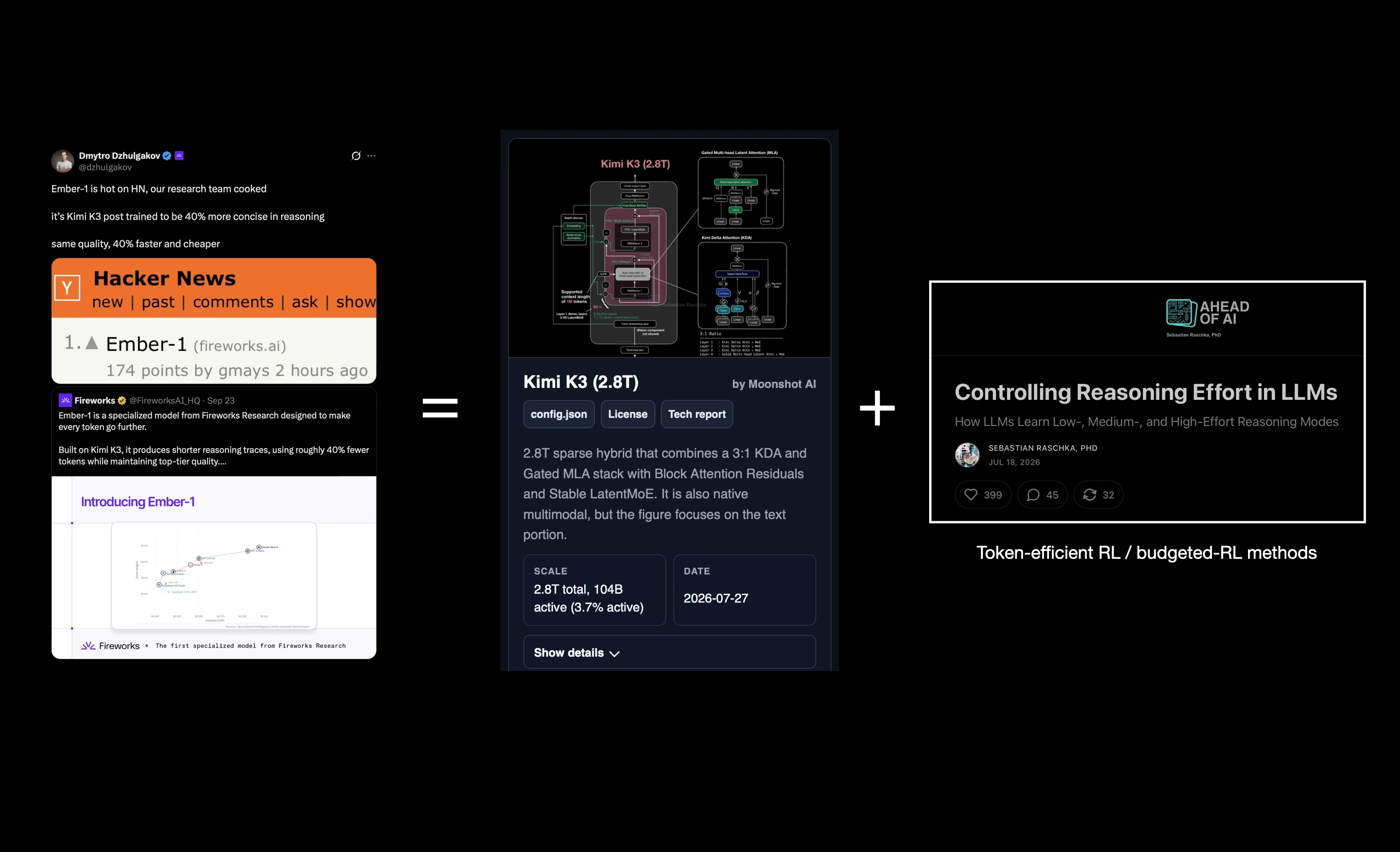
Ember-1, a model post-trained from Kimi K3, achieves a 40% reduction in token usage while maintaining quality. This demonstrates the potential of optimizing existing large language models (LLMs) instead of starting from scratch.
✦ Why It Matters
Consider post-training existing models to enhance efficiency and reduce costs in your AI projects.
Key Takeaways
Full Summary
Ember-1 is a notable example of enhancing an existing open-weight large language model (LLM) through post-training. Fireworks, the team behind Ember-1, took the Kimi K3 model and refined it to generate shorter reasoning traces, resulting in a 40% reduction in token usage without sacrificing performance.
This approach highlights the inefficiency of investing heavily in pre-training when high-quality models are already available. The recommendation is to allocate resources towards post-training improvements, which can lead to significant efficiency gains.
The success of Ember-1 illustrates that optimizing existing models can yield substantial benefits, such as reduced computational costs and faster processing times, while still delivering comparable output quality.
Related