EmbeddingGemma 2: an open, lightweight multimodal embedding model
deepmind.google·6d ago
TL;DR
Physicists have resolved a long-standing discrepancy in muon behavior in magnetic fields, aligning predictions with experimental results to one part in 100 billion. However, this raises questions about the validity of older calculations based on previous experiments.
✦ Why It Matters
Investigate recent findings from particle colliders to stay updated on potential new physics.
Key Takeaways
Full Summary
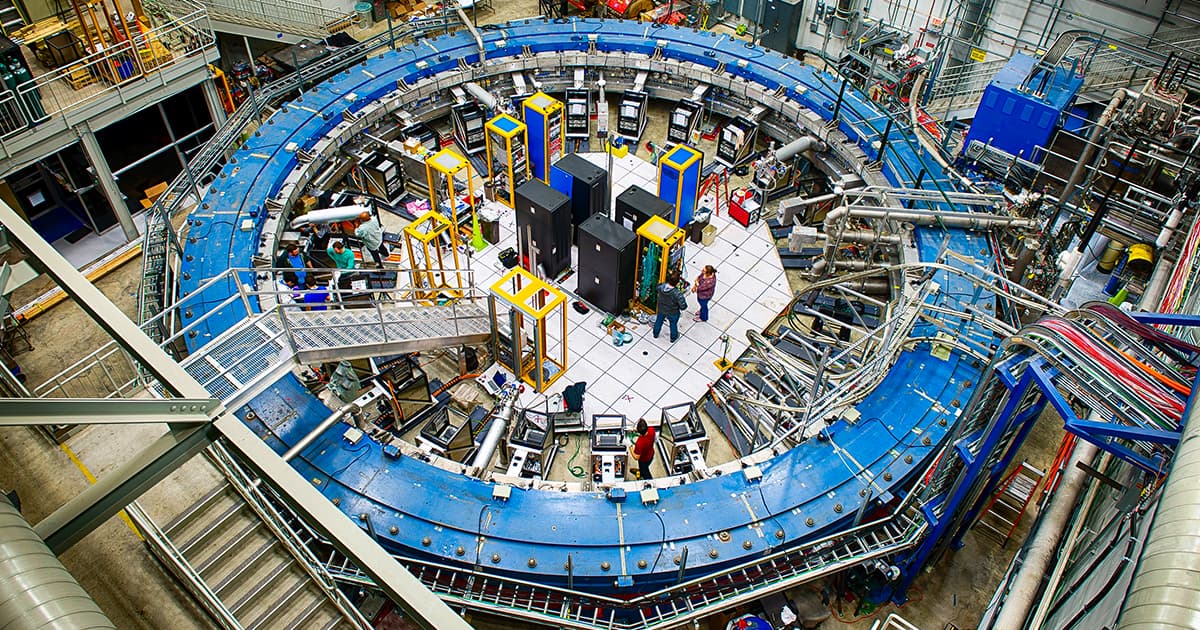
For 25 years, physicists observed a puzzling discrepancy in muon behavior, specifically its g-factor, which measures its wobble in a magnetic field. Initial experiments suggested the presence of unknown particles, but updated theoretical calculations using lattice quantum chromodynamics (QCD) now align with experimental data from Fermilab, showing the muon's wobble can be explained by known particles.
The new calculations achieved a precision of one part in 100 billion, significantly refining earlier predictions. Meanwhile, conflicting results from the VEPP-2000 collider in Siberia have raised questions about the accuracy of pion production measurements, which are crucial for understanding the strong force's impact on muons.
As physicists investigate these discrepancies, they must determine whether they indicate new physics or simply overlooked experimental details.
Related