EmbeddingGemma 2: an open, lightweight multimodal embedding model
deepmind.google·6d ago
TL;DR
An exploratory analysis suggests that the Sumerian King List's unusually long reigns may encode real paleoclimate events, aligning with geological records. By rescaling the chronology, significant climate shifts were identified around 11,600 years ago.
✦ Why It Matters
Consider how ancient texts might inform modern climate research and historical understanding.
Key Takeaways
Full Summary
The Sumerian King List features unusually long reigns for eight kings before a flood, totaling 241,200 years. Researchers speculated that these reigns might reflect real climate events, such as shifts or eruptions.
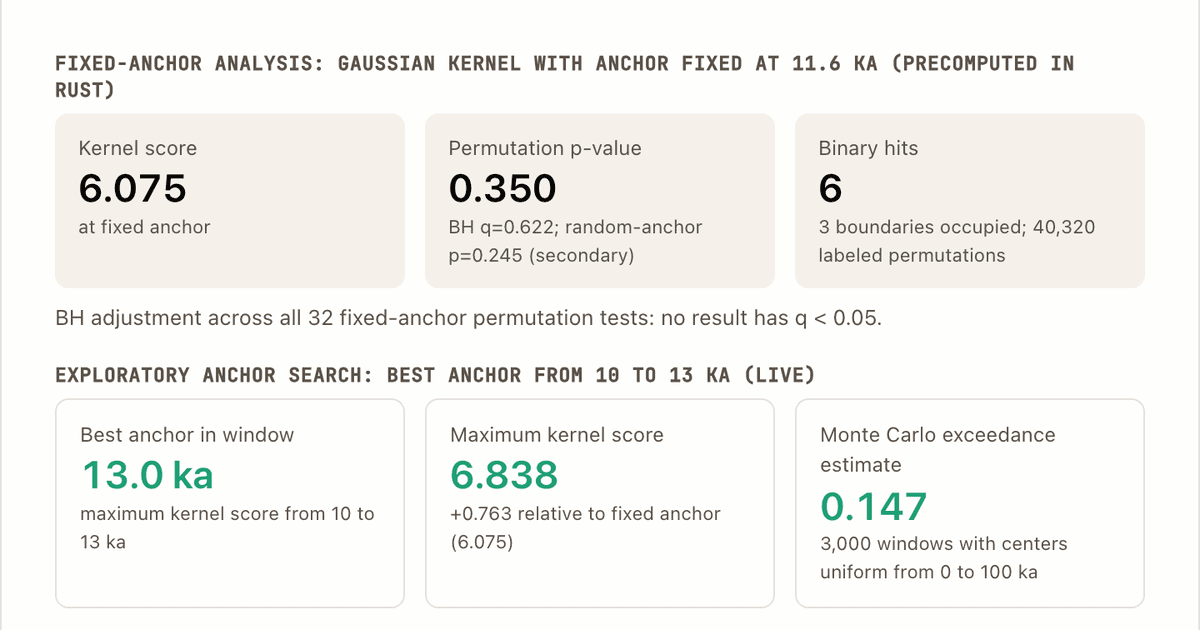
To test this, they rescaled the reign lengths to a fixed 241.2 thousand-year span and anchored one boundary to 11,600 years ago, near the Younger Dryas termination. Despite exploring various ancient chronologies and adjusting for multiple comparisons, the analysis revealed no significant alignment with paleoclimate events, with p-values indicating a lack of unusual patterns.
The best result yielded a p-value of 0.021, which did not withstand adjustments for multiple tests. These findings suggest that the Sumerian reign lengths do not reliably encode historical climate data.
Related