Announcing Native BM25 Ranking in AlloyDB and Cloud SQL
cloud.google.com·18h ago
TL;DR
Software systems generate numerous events, making it challenging to understand their behavior. Logs, metrics, and traces are tools that help capture, count, and link these events for better insights.
✦ Why It Matters
Engineers can leverage logs, metrics, and traces to enhance system observability and streamline troubleshooting processes.
Key Takeaways
Full Summary
Observability refers to the ability to measure and understand the internal states of a system based on the data it generates. Key components include logs, which are textual records of individual events; metrics, which aggregate and quantify these events; and traces, which track the flow of related events across different services.
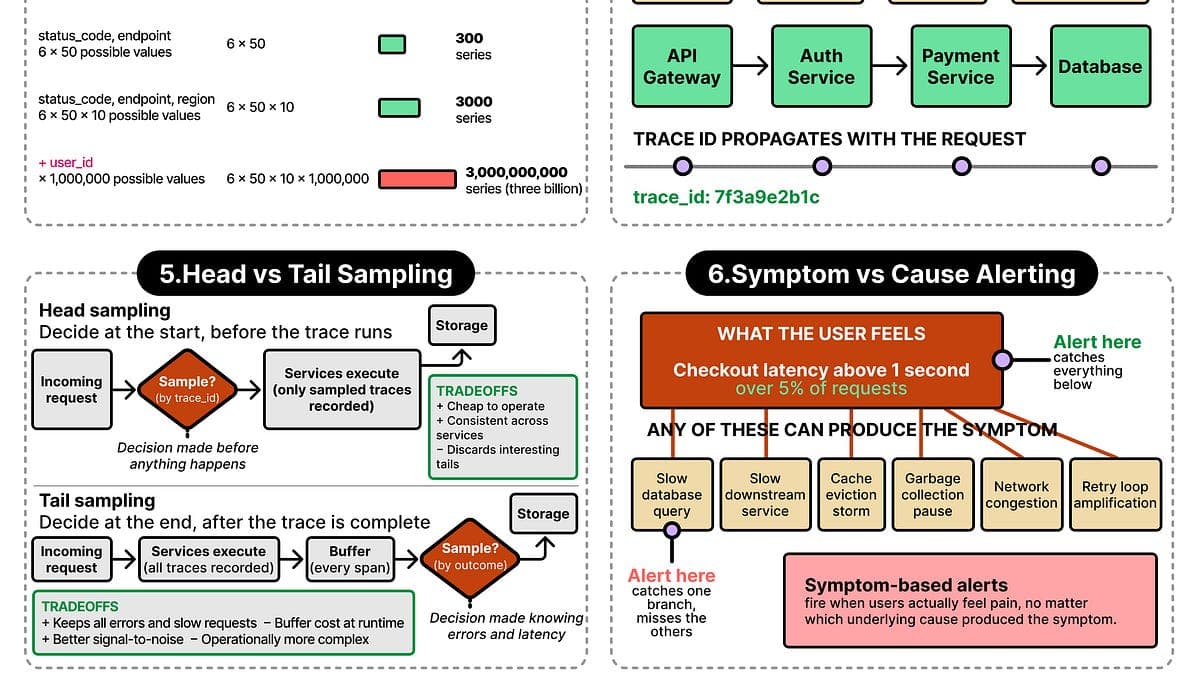
Each of these components provides unique insights into system performance and issues. Concepts like cardinality (the uniqueness of data points), sampling (selectively recording data), and correlation (linking related data) stem from these foundational elements.
By mastering these observability tools, engineers can better diagnose problems and optimize system performance. Understanding how to effectively implement and utilize logs, metrics, and traces is essential for maintaining robust and reliable services.
Related