EmbeddingGemma 2: an open, lightweight multimodal embedding model
deepmind.google·6d ago
TL;DR
Astronomers have discovered the first direct evidence of a wandering black hole feeding on gas as it moves through its galaxy, confirming a long-predicted accretion mechanism. This black hole, located in the dwarf galaxy UGCA 320, has a mass approximately 35,000 times that of the sun.
✦ Why It Matters
Consider exploring gravitational wave detection technologies to study black hole interactions in your research.
Key Takeaways
How It Works
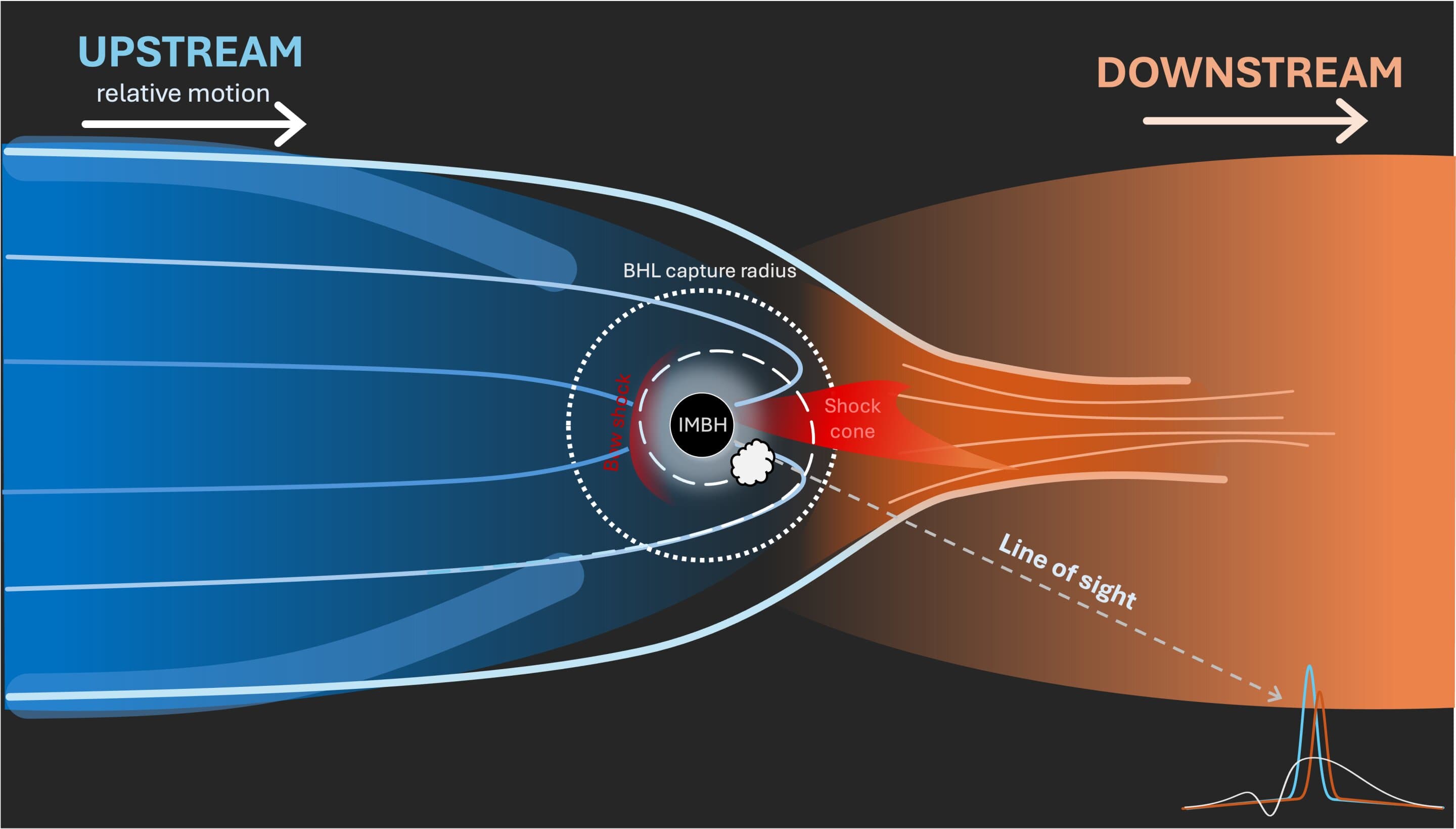
The wandering black hole generates a gravitational wake as it moves through the interstellar medium, pulling gas particles toward it. This process, known as Bondi–Hoyle–Lyttleton accretion, allows the black hole to capture gas from multiple directions, forming a denser trailing stream.
The gravitational focusing creates a bow shock, leading to a lopsided flow structure in the surrounding gas.
Related