Trusted Data Apps for the Agentic Data Cloud, powered by Looker
cloud.google.com·7h ago
TL;DR
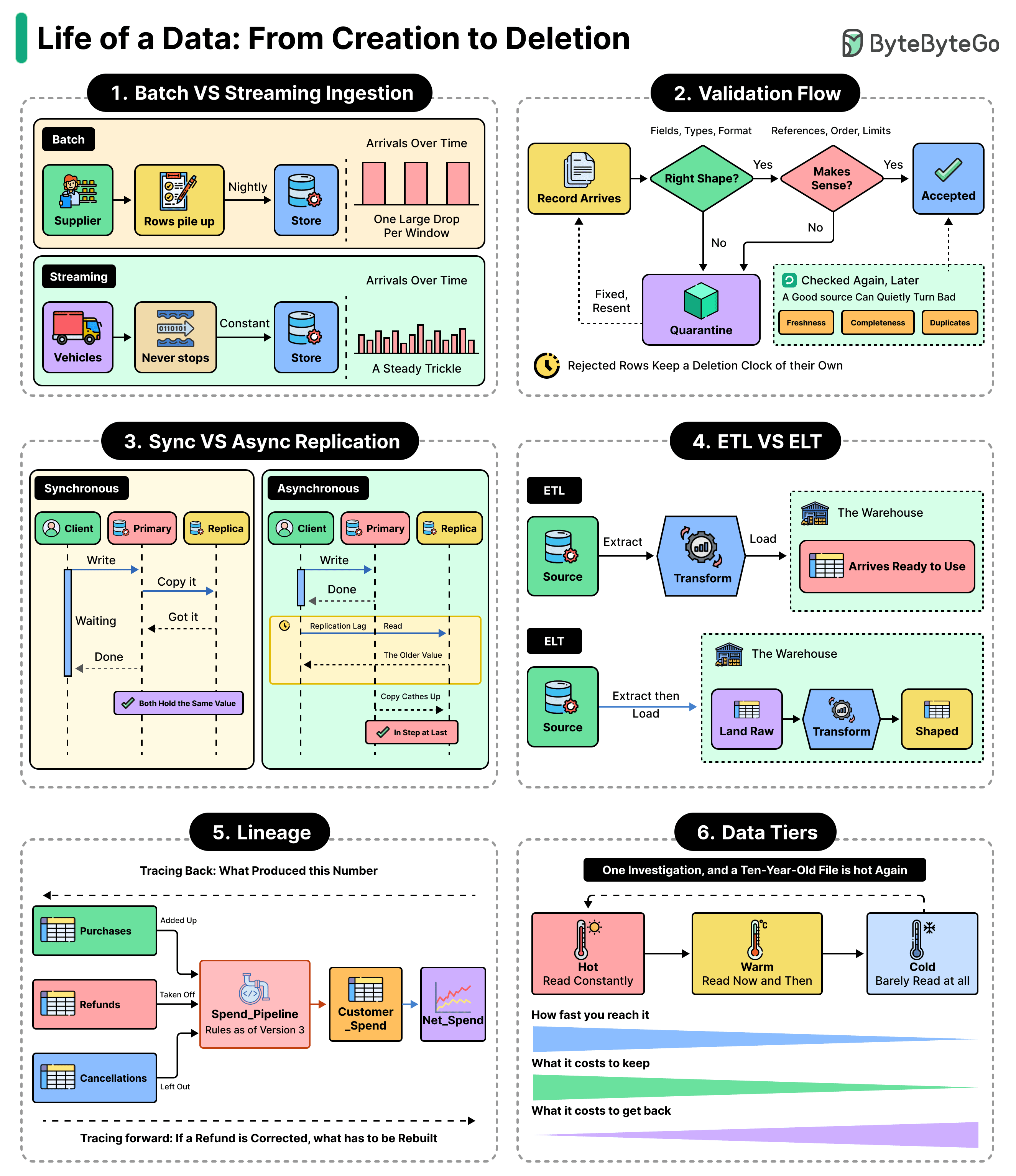
Data in web applications has a complex lifecycle, from creation to deletion, involving multiple copies across various components. Understanding this lifecycle is crucial for effective database design and data management.
✦ Why It Matters
Evaluate your data lifecycle management today to enhance performance and reduce storage costs.
Key Takeaways
Full Summary
Web applications often seem straightforward, but the data they handle can exist in multiple forms and locations. For instance, a user-submitted form may be stored in a database, cached for quick access, indexed for search functionality, analyzed for reports, and backed up for recovery.
Each of these copies serves a distinct purpose and has its own update frequency and lifespan. The lifecycle of data encompasses its journey from creation, through its various uses, to eventual deletion.
By examining this lifecycle, developers can make informed decisions regarding database architecture, performance optimization, reporting strategies, storage management, and privacy considerations. This holistic view helps connect seemingly disparate decisions into a cohesive data management strategy.
Related