EmbeddingGemma 2: an open, lightweight multimodal embedding model
deepmind.google·6d ago
TL;DR
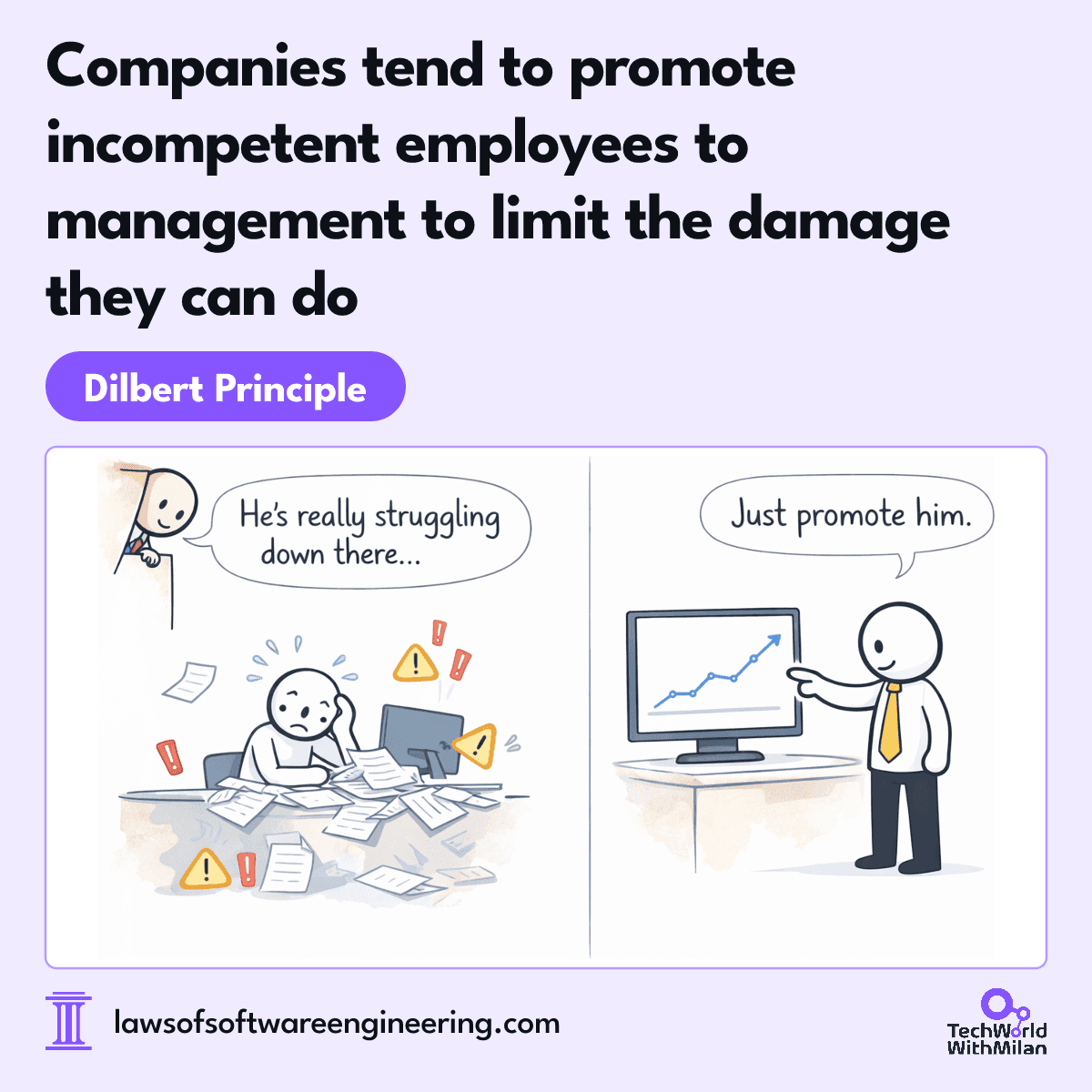
Companies often promote underperforming employees to management roles to minimize their negative impact on operations. This practice highlights a disconnect between technical skills and leadership capabilities.
✦ Why It Matters
Evaluate your team's strengths and consider alternative career paths beyond management for underperforming employees.
Key Takeaways
Full Summary
Organizations sometimes address underperformance by promoting struggling employees into management positions, a tactic that aims to limit their negative impact on essential tasks. This approach stems from a belief that lower-level employees contribute more value than managers, leading to a disconnect between technical skills and leadership capabilities.
The Dilbert Principle highlights this issue, suggesting that many companies default to promoting engineers into management without considering their suitability or desire for such roles. As a result, management layers may be filled with individuals lacking both technical expertise and effective leadership skills, resulting in misguided priorities and decisions.
However, some modern tech companies are recognizing this flaw and are implementing dual career tracks to allow engineers to excel without being forced into management. Ultimately, effective organizations prefer to coach or reassign underperformers rather than promote them into leadership roles.
Related