EmbeddingGemma 2: an open, lightweight multimodal embedding model
deepmind.google·6d ago
TL;DR
Nvidia is expanding CUDA support to RISC-V CPUs, requiring server-grade specifications to ensure efficient GPU compute. This move enhances the compatibility of RISC-V with CUDA, particularly for machine learning applications.
✦ Why It Matters
Evaluate your RISC-V hardware against Nvidia's specifications to ensure compatibility with CUDA.
Key Takeaways
Full Summary
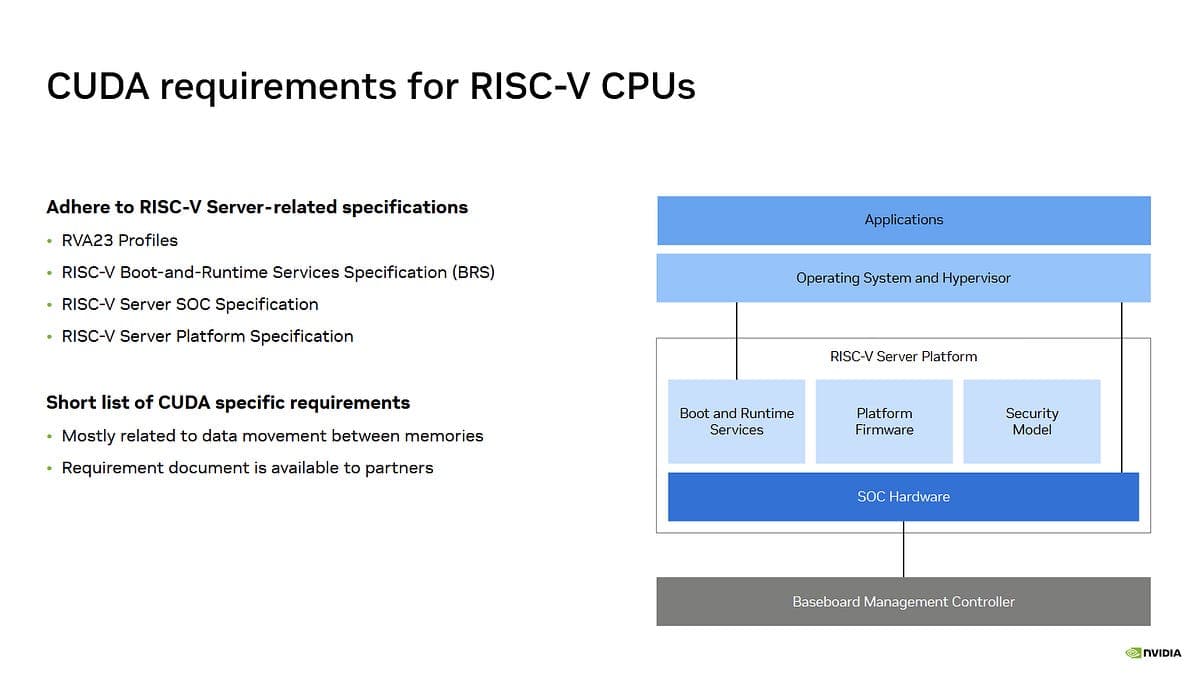
CUDA, Nvidia's parallel computing platform, has primarily supported x86-64 and aarch64 architectures, but is now targeting RISC-V CPUs. To effectively run CUDA, RISC-V CPUs must meet specific requirements, including adherence to the RVA23 standard and server platform specifications that ensure reliability, availability, and serviceability (RAS).
Nvidia emphasizes the need for features like PCIe coherency to prevent data inconsistencies during GPU operations. Although RISC-V's software ecosystem is still developing, Nvidia's collaboration with SiFive aims to demonstrate a CUDA-capable RISC-V system.
However, existing RISC-V hardware may not meet these stringent requirements, limiting immediate accessibility for enthusiasts and developers. Nvidia's approach suggests a focus on high-performance server systems rather than consumer-grade hardware.
Related