EmbeddingGemma 2: an open, lightweight multimodal embedding model
deepmind.google·6d ago
TL;DR
Many Americans struggle with loneliness and lack of support during tough times, often feeling they have no one to talk to. Data from the Pew Research Center highlights the discomfort people feel discussing mental health with various social connections.
✦ Why It Matters
Encourage open conversations about mental health with friends or colleagues to combat loneliness.
Key Takeaways
Full Summary
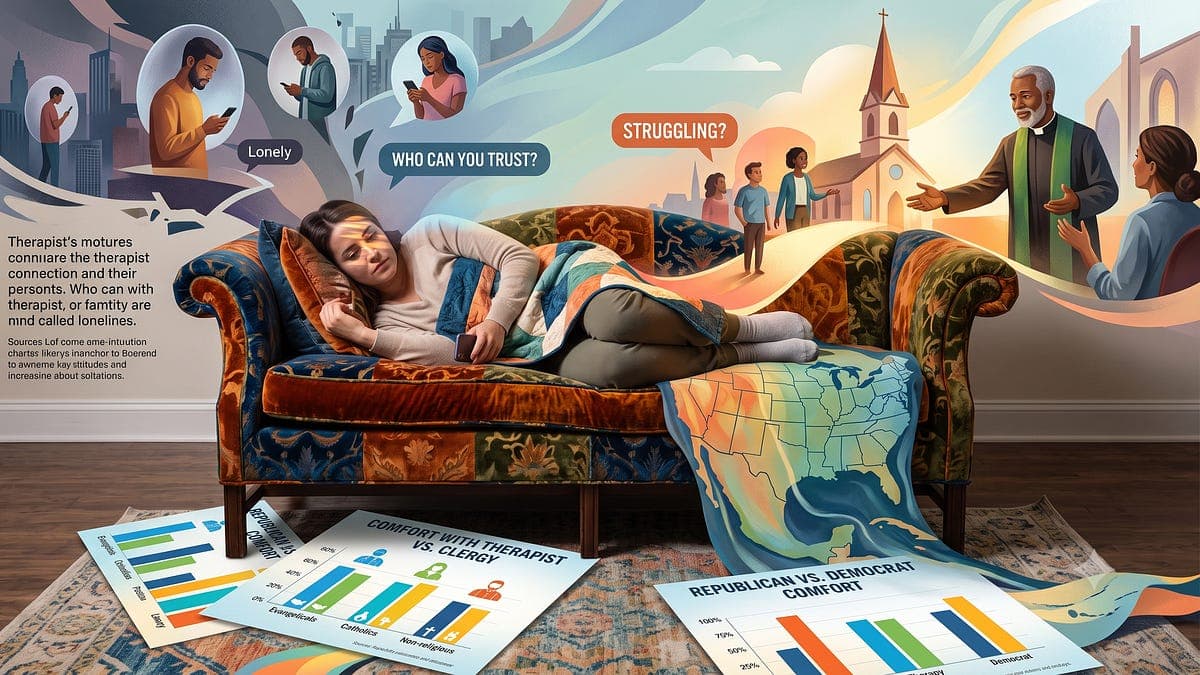
A study using data from the Pew Research Center examined who individuals feel comfortable talking to about their mental health. The findings indicate that spouses are the most trusted confidants, with nearly 80% of respondents across various religious groups feeling comfortable discussing their struggles with them.
Close friends and mental health professionals follow, while co-workers and neighbors rank low in trust. Interestingly, evangelicals show a higher comfort level with clergy compared to other groups, with 56% preferring to talk to their pastor over a therapist.
The study also highlights that political affiliation influences comfort levels, with Republicans being less comfortable with therapists but more so with clergy. This suggests that social connections and political identity significantly shape mental health discussions.
Related