Agentic data science with the Data Agent Kit
cloud.google.com·6h ago
TL;DR
The Kimi K3 report details the construction of a 2.8-trillion-parameter frontier model, emphasizing that the model's architecture is only a small part of the overall process. It highlights the extensive documentation and methodologies involved in building such advanced AI systems.
✦ Why It Matters
Review your model documentation practices to enhance transparency and reproducibility in your AI projects.
Key Takeaways
How It Works
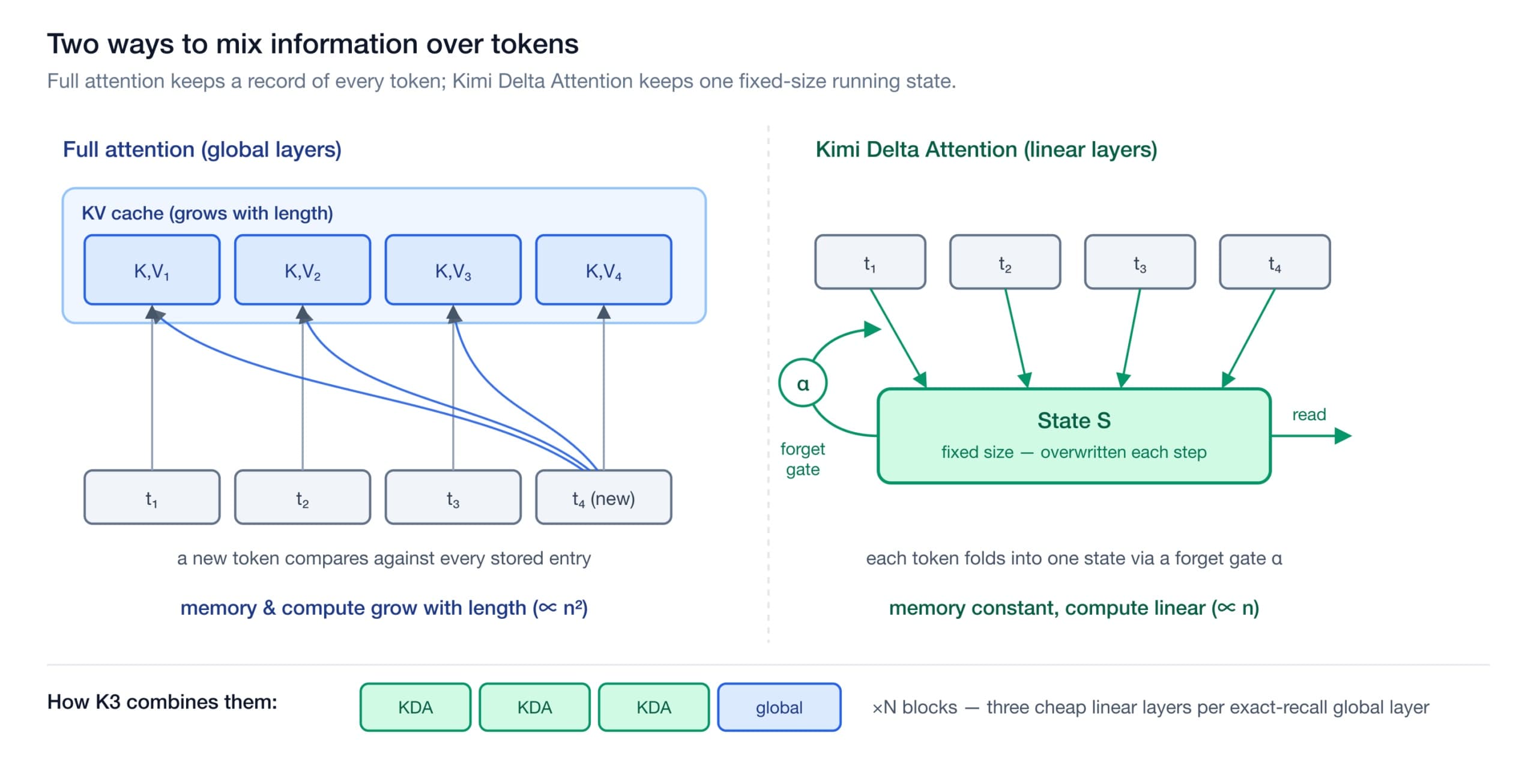
Kimi K3 employs a fixed-size running state for attention, allowing it to manage long contexts efficiently without the typical memory overhead. This is complemented by implicit positional encoding, which eliminates the need for complex rescaling when extending context windows.
Additionally, the model's architecture allows layers to directly access outputs from earlier layers, preserving important information and enhancing overall performance.
Related